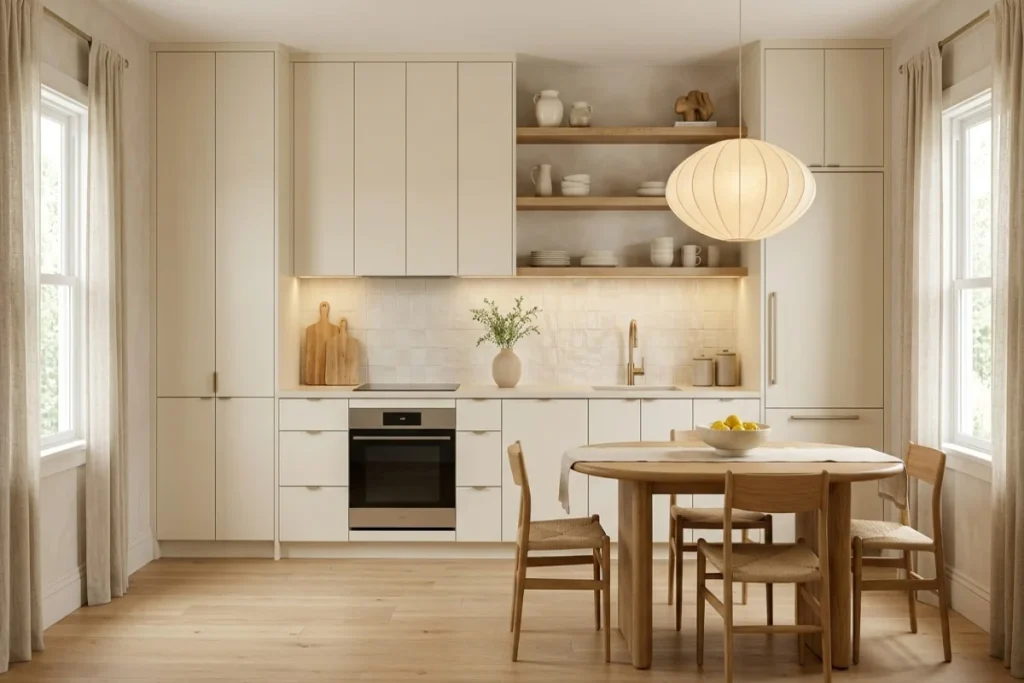
A beautiful Japandi kitchen brings together the warmth of Japanese-inspired design and the clean, practical style of Scandinavian interiors. Think natural wood cabinets, soft neutral colors, beautiful stone countertops, warm lighting, and simple accessories that make your kitchen feel peaceful without looking empty.
The best part? You don’t need a huge kitchen or an expensive renovation to create this look. With the right colors, cabinet finishes, lighting, and thoughtful storage, even a simple kitchen can feel modern, elegant, and beautifully designed.
These 10 Japandi kitchen ideas show you exactly how to create a calm, minimal, and expensive-looking kitchen while keeping it comfortable and practical for everyday life.
1. Warm Oak Japandi Kitchen With Cream Cabinets and Natural Stone
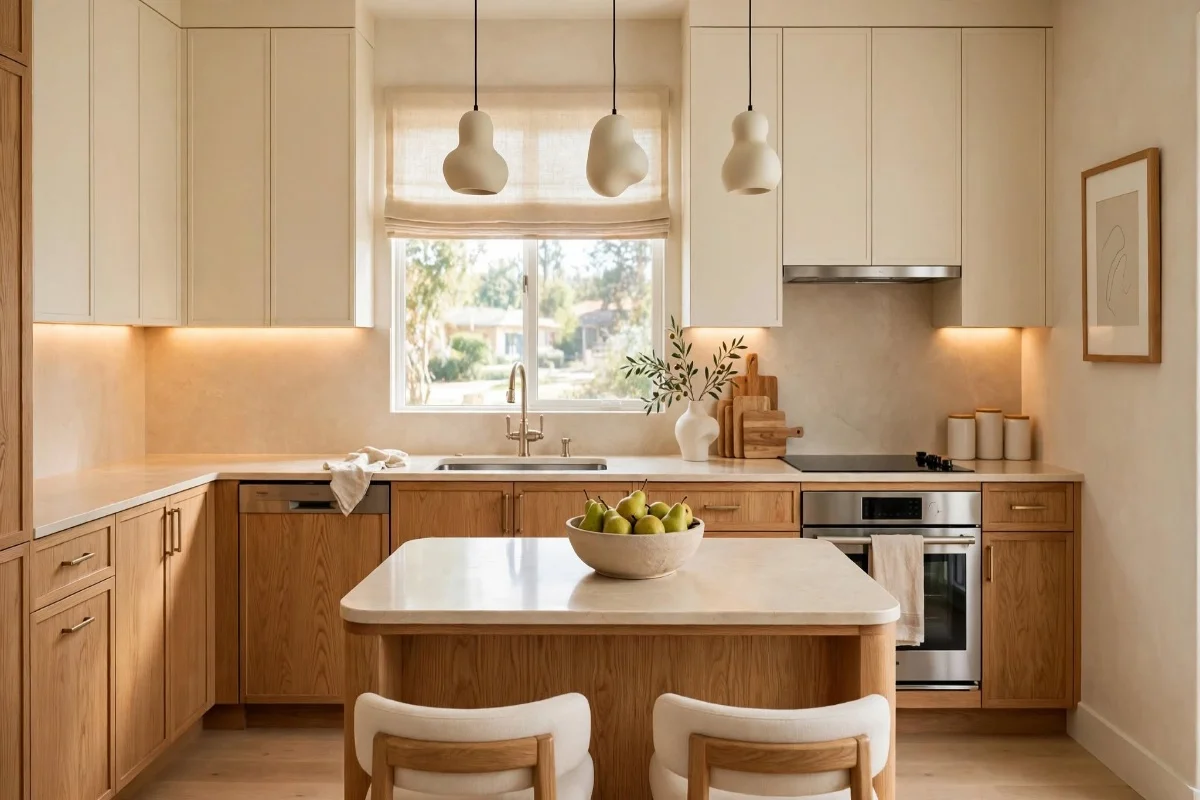
A warm oak and cream kitchen is one of the easiest ways to create a beautiful Japandi look. Choose flat-front cream upper cabinets, natural oak lower cabinets, and a soft beige stone countertop. Add a matching backsplash, brushed brass cabinet pulls, and warm under-cabinet lighting. Style the countertop with a handmade ceramic vase, a small olive branch, and a wooden cutting board. The combination feels welcoming, sophisticated, and beautifully balanced.
To recreate this design, start by updating your cabinet doors or painting existing cabinets a warm cream color. If real stone is outside your budget, choose a quality beige quartz or stone-look laminate countertop. Keep everyday appliances inside cabinets where possible, and use matching storage containers to reduce visual clutter. A simple oak floating shelf can add warmth without making the kitchen feel crowded.
2. Minimalist Walnut Japandi Kitchen With a Sculptural Kitchen Island
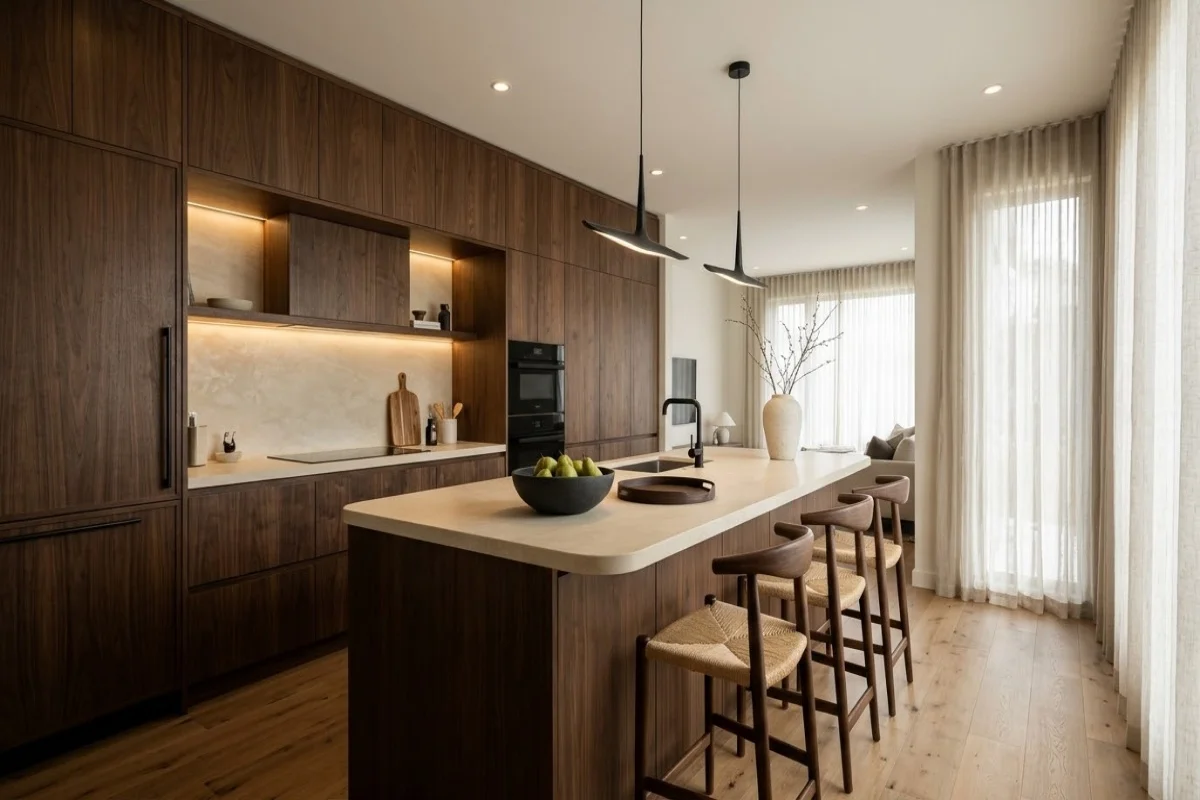
Dark walnut cabinetry can make a Japandi kitchen feel luxurious without adding unnecessary decoration. Pair rich walnut cabinets with warm ivory walls, a creamy quartz countertop, and a beautifully shaped island with rounded corners. Add two comfortable counter stools with natural woven seats, a slim black pendant light, and a large ceramic bowl filled with green pears. The dark wood creates depth, while the pale stone and soft lighting keep the kitchen calm and modern.
For this look, use walnut veneer or walnut-look cabinet fronts instead of expensive solid wood. Choose handleless cabinets for a clean finish, and keep the island free from unnecessary accessories. If your kitchen is small, replace the large island with a narrow peninsula or compact movable prep table. Leave comfortable walking space around the island so the design stays practical.
3. Soft Sage Green Japandi Kitchen With Light Wood and Cream Tiles
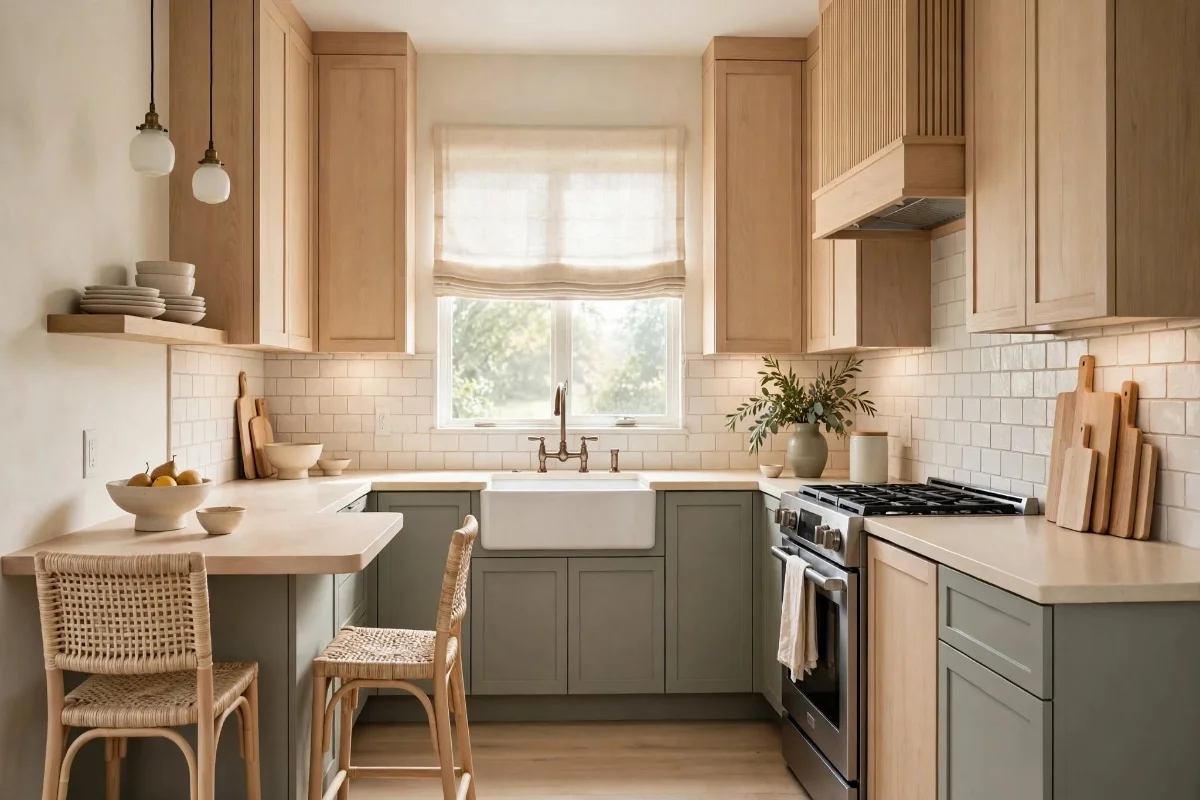
Soft sage green is a beautiful choice for a Japandi kitchen because it adds color without making the space feel busy. Use muted sage lower cabinets, pale oak upper cabinets, and creamy handmade-look backsplash tiles. Add a warm white countertop, brushed bronze hardware, and natural linen window shades. A small wooden stool, ceramic fruit bowl, and delicate greenery create a peaceful, nature-inspired kitchen that feels stylish but still welcoming.
To achieve this look affordably, paint your existing lower cabinets a gray-toned sage green and keep the upper cabinets light. Choose tiles with a subtle handmade texture rather than bold patterns. Use simple drawer organizers and concealed storage so your counters stay clear. This color combination works especially well in small kitchens because the light wood and cream surfaces help the room feel open.
4. Modern Japandi Kitchen With Fluted Wood Cabinets and Warm Beige Stone
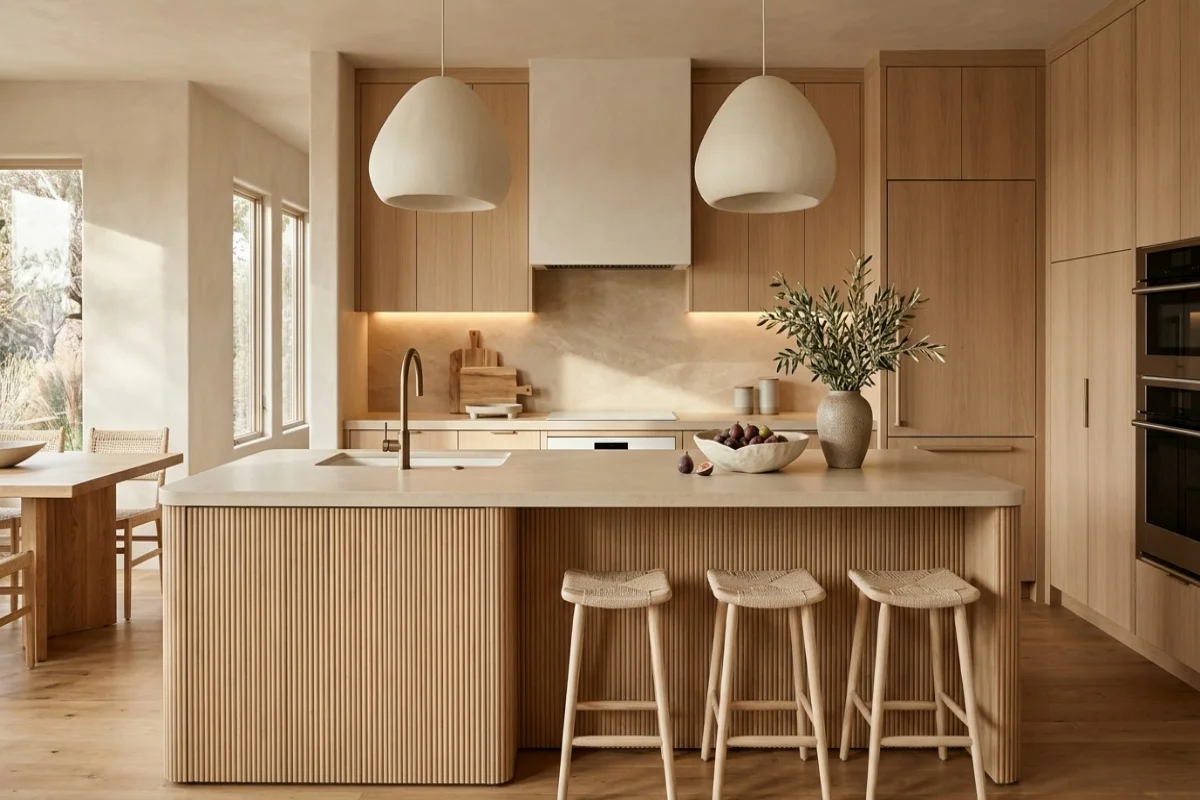
Fluted wood details can turn a simple kitchen into something that feels professionally designed. Create a warm, elegant space with light oak cabinets, a fluted wood island front, beige stone countertops, and a matching full-height backsplash. Add sculptural cream pendant lights, slim bronze fixtures, and a large handmade ceramic vase with a few branches. The vertical wood texture becomes the main feature, giving the kitchen character without needing colorful decorations.
You don’t need fluted panels on every cabinet to achieve this look. Add them only to the island front or one visible cabinet section. Use smooth flat-front cabinets everywhere else to keep the design balanced. If you’re working with a smaller budget, decorative wood slat panels can create a similar effect. Choose easy-clean materials near the sink and stove, and avoid placing delicate unfinished wood where it will get splashed.
5. Small Japandi Kitchen With Light Oak Cabinets and Smart Hidden Storage
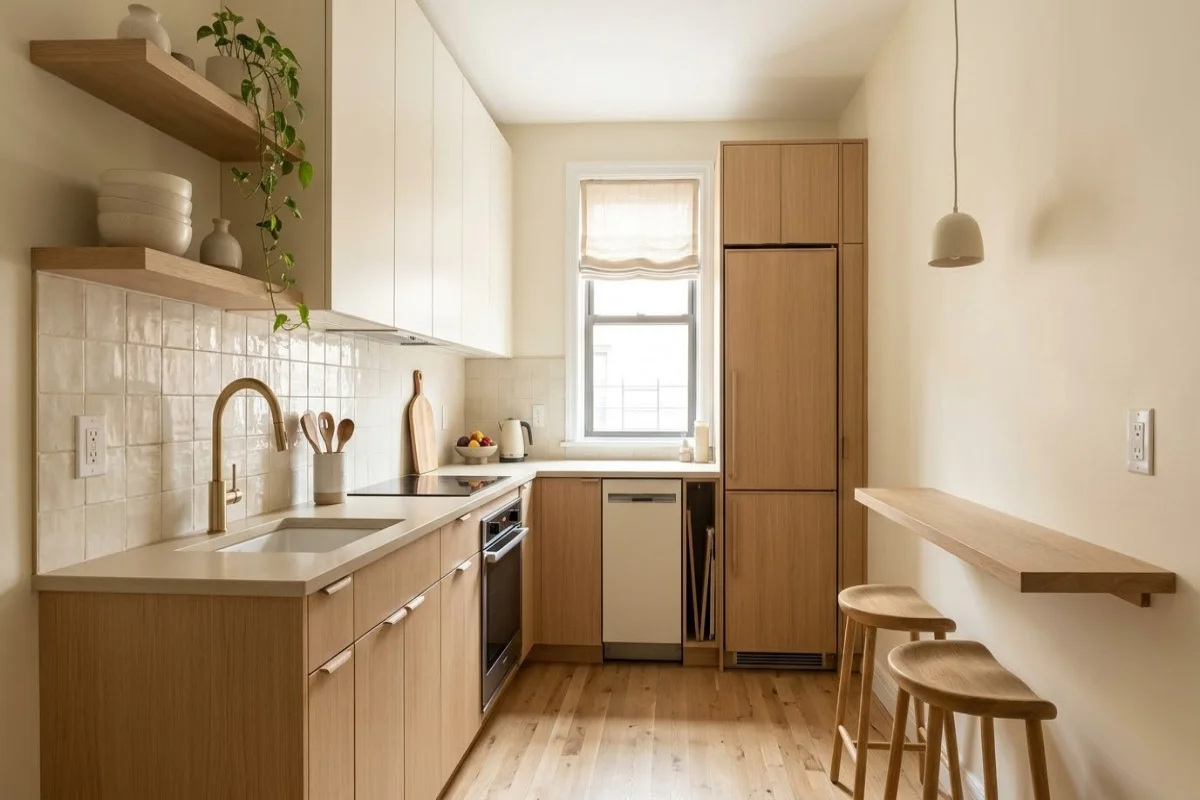
A small kitchen can look incredibly beautiful with the right Japandi design. Choose pale oak lower cabinets, warm white upper cabinets, a light beige countertop, and a simple cream backsplash. Add an under-cabinet lighting strip, a slim wooden shelf, and a compact ceramic pendant above a small dining counter. Use a few carefully chosen accessories, such as matching stoneware canisters and a small plant, to make the kitchen feel cozy without using valuable preparation space.
For a small kitchen, focus on storage before decorating. Install pull-out drawers, vertical tray organizers, and cabinets that reach close to the ceiling. Choose integrated or counter-depth appliances when your layout allows. Keep at least one section of countertop clear for cooking. If there is no room for an island, use a narrow wall-mounted breakfast ledge with two stools that tuck underneath.
6. Moody Japandi Kitchen With Charcoal Cabinets and Warm Walnut Accents
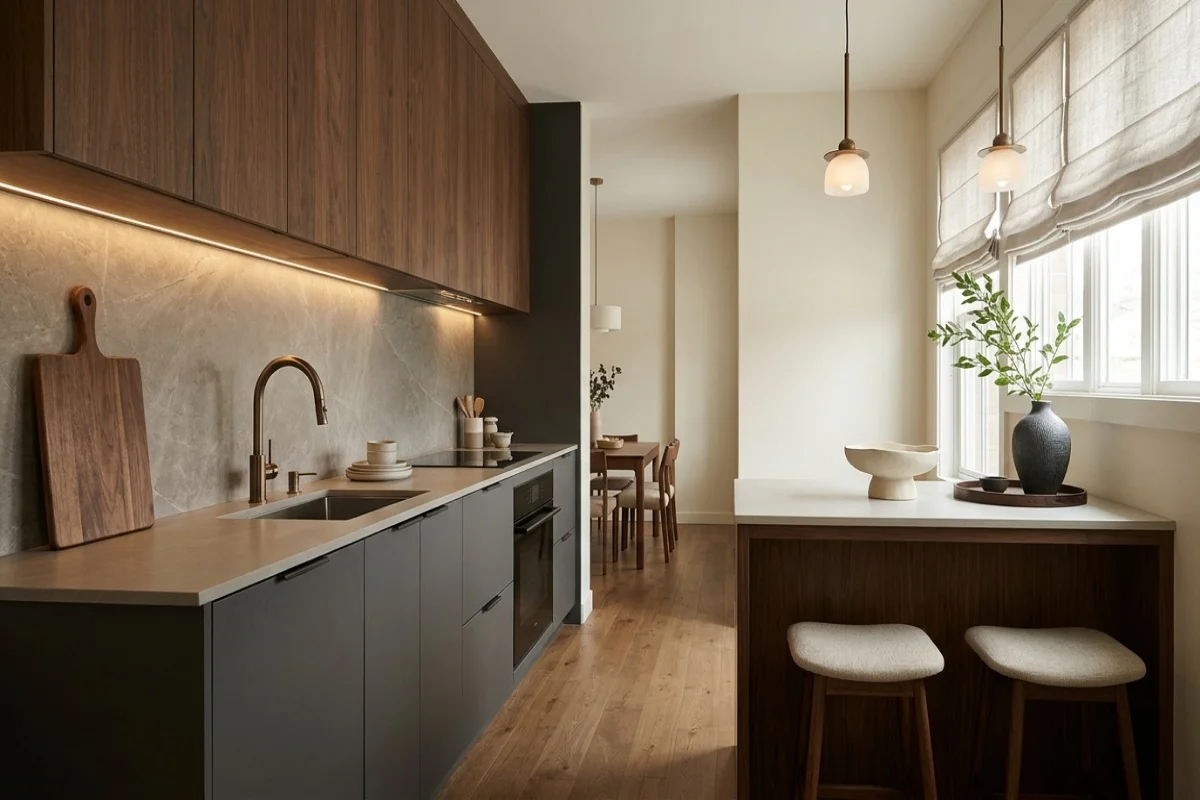
A darker Japandi kitchen can feel calm and expensive when you balance deep colors with natural materials. Choose soft charcoal lower cabinets, rich walnut upper cabinets, and a warm gray stone backsplash. Add a creamy countertop, aged bronze hardware, and subtle under-cabinet lighting. A dark ceramic vase, simple wooden tray, and warm linen accessories complete the look. The contrast between charcoal and walnut creates a sophisticated kitchen without making it feel cold.
To prevent dark cabinetry from making the room feel smaller, keep the walls and ceiling warm white. Use light countertops to reflect natural light, and avoid adding too many black accessories. If you’re updating existing cabinets, paint only the lower cabinets charcoal and introduce walnut through floating shelves or cabinet panels. This gives you the same designer-inspired contrast without replacing the entire kitchen.
7. Japandi Kitchen With a Curved Island and Soft Earth-Tone Palette
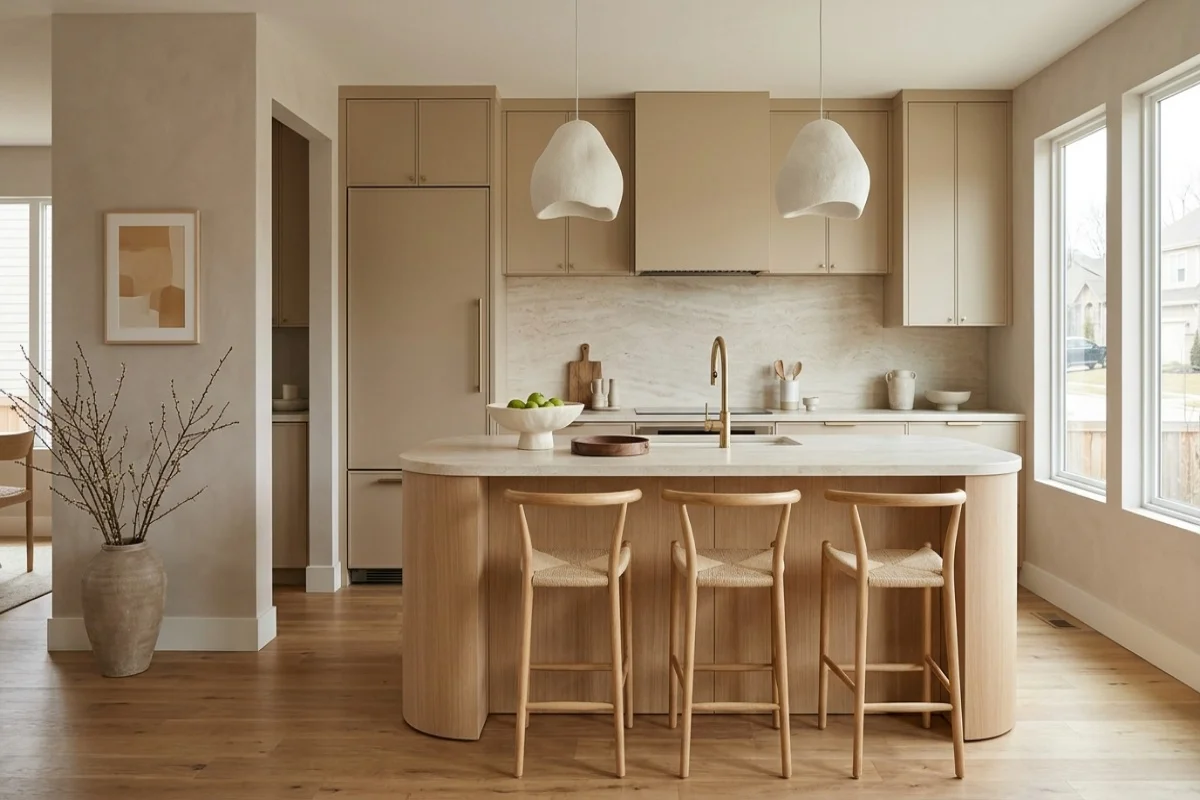
A curved kitchen island brings a soft, modern feeling to Japandi design. Pair creamy beige cabinets with a rounded oak island, pale travertine-look countertops, and warm ivory walls. Add two sculptural pendant lights, comfortable wooden counter stools, and a shallow ceramic bowl with seasonal fruit. Use subtle taupe and caramel accents to create a layered color palette that feels natural and expensive. The rounded shapes make the kitchen feel welcoming while keeping the overall design beautifully minimal.
If you already have a rectangular island, you can introduce softer shapes through rounded counter stools, curved pendant lights, and oval serving trays instead of rebuilding it. For a new island, ask your cabinetmaker about rounded end panels and a countertop with softened corners. Make sure the island does not block the sink, refrigerator, or main walkway. The goal is a beautiful kitchen that still works comfortably every day.
8. Scandinavian-Inspired White Japandi Kitchen With Natural Oak Details
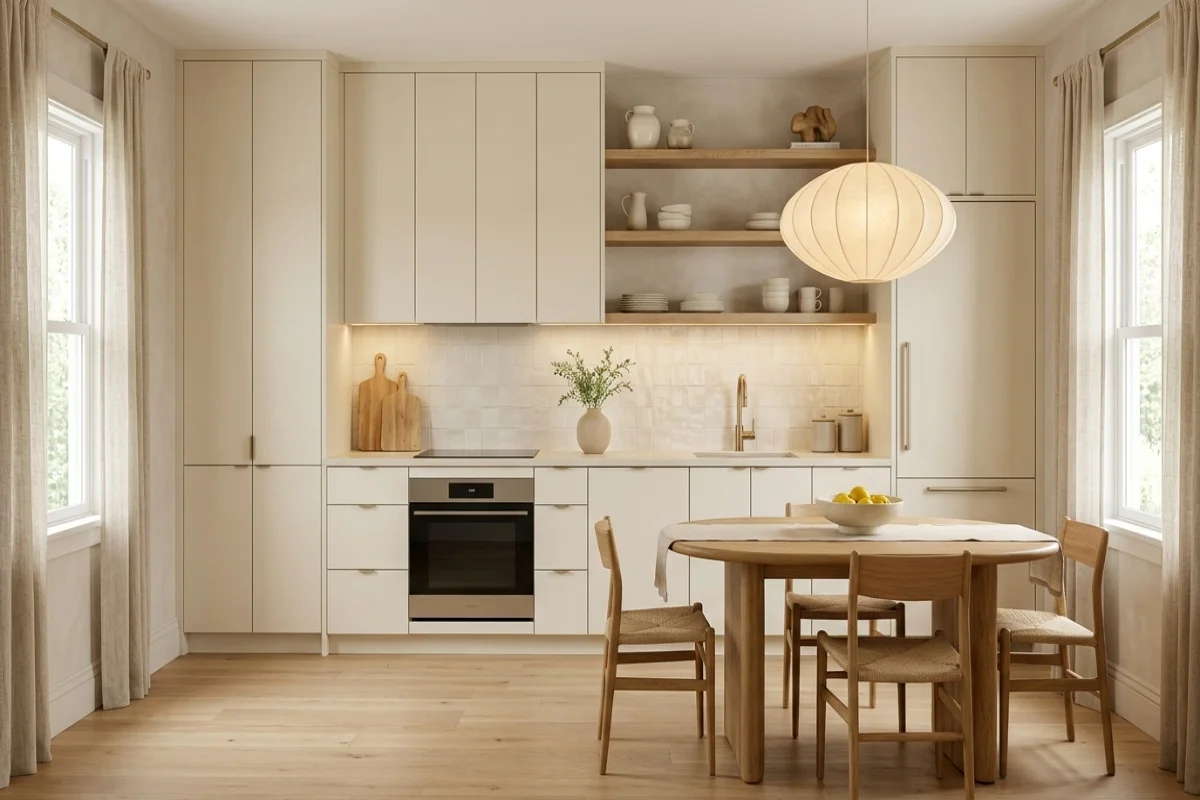
A white Japandi kitchen should feel warm and inviting rather than plain or clinical. Choose soft ivory cabinets, light oak open shelves, a creamy stone backsplash, and a warm white countertop. Add a natural oak dining table, woven dining chairs, and simple cream pendant lights. Decorate with handmade pottery, a wooden breadboard, and a small branch arrangement. The mix of white surfaces, natural wood, and soft textures creates a bright kitchen that feels both peaceful and beautifully finished.
Use warm white paint instead of bright blue-white, which can make natural wood look harsh. Keep open shelving limited to one small section so you don’t create extra cleaning work. Arrange a few everyday dishes and ceramic pieces in neutral colors. If you have an older white kitchen, changing the cabinet handles, adding oak shelves, and replacing cool lighting with warm bulbs can make a noticeable difference.
9. Earthy Japandi Kitchen With Terracotta, Oak, and Textured Walls
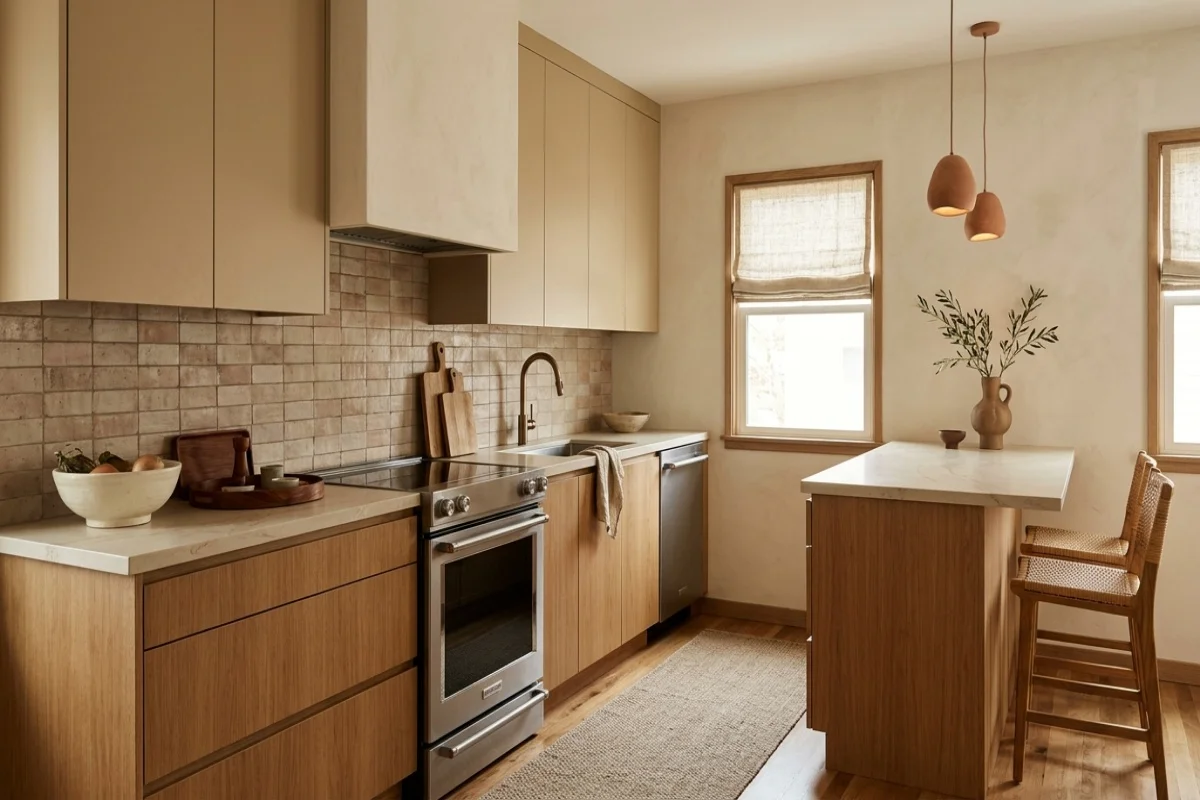
Earthy colors can give a Japandi kitchen warmth while keeping its simple, peaceful style. Choose natural oak cabinets, muted clay-colored backsplash tiles, and a soft sand-colored countertop. Add warm beige walls, a bronze faucet, and woven counter stools. Decorate with beautiful handmade ceramics, a dark wooden tray, and a branch of olive greenery. The terracotta accents add character, while the simple cabinetry and natural materials keep everything calm and coordinated.
To recreate this design, use terracotta as an accent rather than covering the entire kitchen in orange tones. A muted clay backsplash or a few earthy accessories is enough. Choose sealed, easy-clean tiles behind the stove and sink. If you want a budget-friendly update, add clay-colored ceramics, a woven runner, and warm wood accessories to an existing neutral kitchen before investing in larger changes.
10. Luxury Japandi Kitchen With Walnut Cabinets, Cream Marble-Look Stone, and Soft Lighting
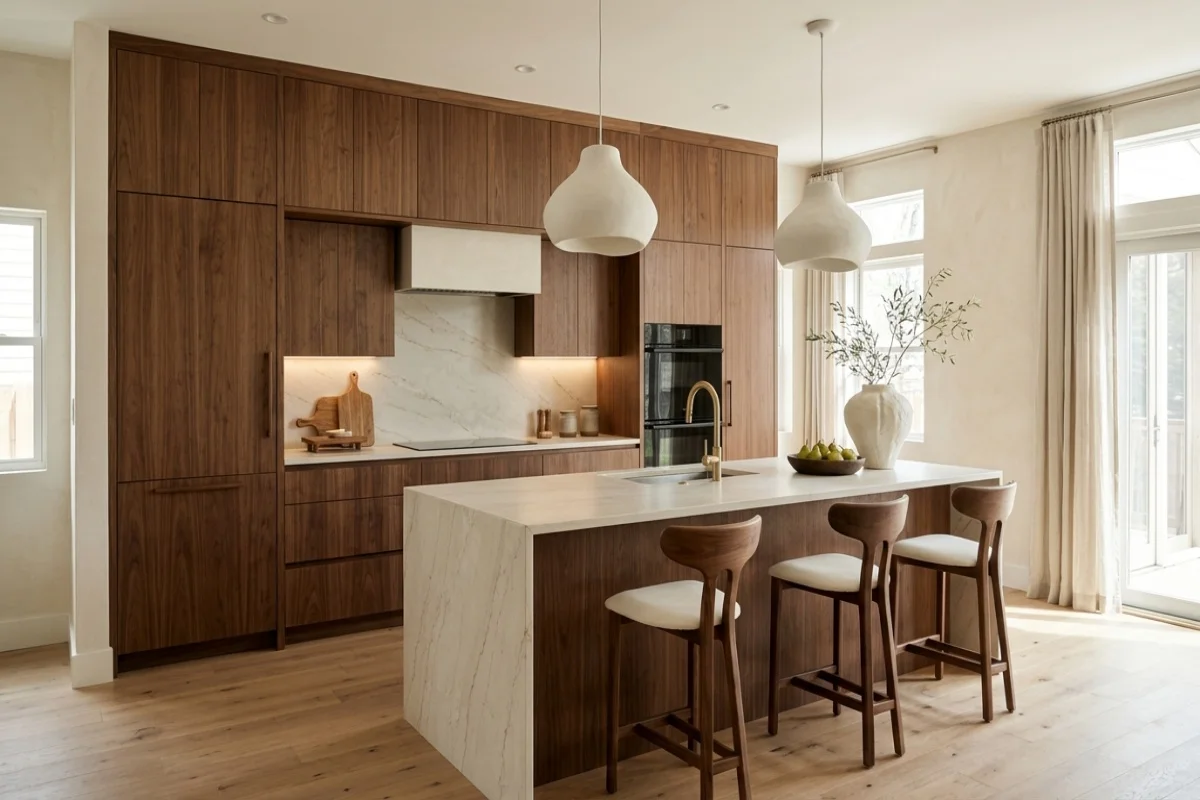
For a truly elegant Japandi kitchen, combine rich walnut cabinetry with creamy marble-look stone, sculptural lighting, and beautifully integrated storage. Design a large but realistic island with waterfall-style stone ends, rounded walnut counter stools, and two soft white pendant lights. Use a matching stone backsplash, a concealed range hood, and warm LED lighting beneath the upper cabinets. Finish with a handmade ceramic vase, a low wooden tray, and a small arrangement of fresh greenery. The result feels like a high-end designer kitchen while remaining peaceful and comfortable.
To achieve a similar look without a luxury renovation budget, concentrate your spending on the most visible features. Choose walnut-look cabinet fronts, durable quartz with subtle beige veining, and one beautiful statement light fixture. Keep hardware minimal and appliances neatly integrated where possible. Even if your kitchen is smaller, using the same three main materials—walnut, creamy stone, and warm metal—can create a cohesive, expensive-looking Japandi design.
What Makes a Kitchen Look Japandi?
Japandi style combines two design approaches: Japanese-inspired simplicity and Scandinavian comfort.
The goal is to create a kitchen that feels peaceful, practical, natural, and thoughtfully designed.
A beautiful Japandi kitchen usually includes:
- Natural wood: Oak, walnut, ash, or convincing wood-look finishes.
- Soft neutral colors: Cream, beige, warm white, taupe, and greige.
- Earthy accents: Sage green, charcoal, muted terracotta, and olive.
- Simple cabinetry: Flat-front doors, clean lines, and minimal hardware.
- Natural-looking countertops: Quartz, stone, or high-quality stone-look materials.
- Warm lighting: Under-cabinet lights, simple pendants, and soft ambient lighting.
- Beautiful everyday accessories: Handmade ceramics, wooden trays, pottery, and greenery.
- Smart storage: Organized drawers, concealed appliances, and clear preparation surfaces.
The key is choosing fewer decorative pieces but making sure each one looks beautiful and serves a purpose.
Best Japandi Kitchen Color Combinations
Choosing the right colors is one of the most important parts of creating this style.
Here are some beautiful combinations that work well in real homes:
- Warm oak + cream + beige: Soft, timeless, and easy to coordinate.
- Walnut + ivory + bronze: Rich, elegant, and luxurious.
- Sage green + light oak + warm white: Fresh, natural, and relaxing.
- Charcoal + walnut + warm gray: Moody, modern, and sophisticated.
- Terracotta + sand + natural oak: Earthy, inviting, and full of warmth.
- Ivory + pale oak + taupe: Minimal, bright, and peaceful.
For a balanced design, choose one main cabinet color, one supporting material, and one smaller accent color.
This keeps the kitchen visually calm while allowing its materials and textures to stand out.
How to Make a Japandi Kitchen Look Expensive on a Budget
You don’t need expensive custom cabinetry to make your kitchen look professionally designed.
Start with the changes that people notice first.
1. Update Your Cabinet Color
Painting existing cabinets warm cream, sage green, or soft charcoal can completely change the room.
Choose a durable cabinet paint designed for kitchen use, and prepare the surfaces properly.
2. Replace Outdated Cabinet Handles
Simple brushed brass, bronze, black, or slim wood handles can make older cabinets feel more modern.
For a minimalist look, choose hardware that blends with the cabinets.
3. Add Warm Under-Cabinet Lighting
Under-cabinet lighting makes countertops more useful and highlights beautiful backsplash materials.
Choose a warm white light, generally around 2700K–3000K, for a cozy atmosphere.
4. Introduce Natural Wood
You can create warmth with oak shelves, wooden stools, cutting boards, or a small breakfast table.
You don’t need to replace every cabinet with natural wood.
5. Style Your Countertops Carefully
Use one beautiful ceramic vase, a wooden tray, or a small matching canister set.
Avoid filling every corner with decorative objects.
6. Upgrade One Main Feature
If your budget allows, invest in one noticeable improvement, such as a backsplash, pendant light, countertop, or island treatment.
One thoughtfully chosen feature can make a bigger impact than many unrelated purchases.
Japandi Kitchen Lighting Tips
Lighting makes a huge difference in how a Japandi kitchen looks and feels.
Use three types of lighting when possible:
General lighting: Recessed ceiling lights or simple flush-mount fixtures that provide comfortable overall brightness.
Task lighting: Under-cabinet lights that brighten the sink, preparation area, and cooking surfaces.
Decorative lighting: Beautiful pendant lights over an island or breakfast counter.
Choose paper-inspired shades, matte ceramic pendants, frosted glass, or simple bronze fixtures.
Use dimmers where practical, and keep lighting bright enough for safe cooking.
Japandi Kitchen Accessories That Actually Look Beautiful
Japandi kitchens look best when accessories feel intentional.
Choose useful items made from natural-looking materials.
Some beautiful options include:
- Handmade ceramic vases in cream, sand, or charcoal.
- Solid wood or wood-look serving trays.
- Matching stoneware storage canisters.
- Oak cutting boards.
- Simple ceramic fruit bowls.
- Linen kitchen towels.
- Woven counter stools.
- A small olive branch or leafy plant.
- Minimalist pendant lights.
- Neutral runners with subtle texture.
Instead of displaying everything, create one or two small arrangements and leave the rest of the countertop open.
This keeps your kitchen beautiful and practical.
Common Japandi Kitchen Decorating Mistakes to Avoid
Using too much white: A completely white kitchen can feel cold. Add natural wood, warm lighting, and textured materials.
Adding too many accessories: Japandi style is about thoughtful simplicity. Keep decorative items limited and useful.
Mixing too many wood finishes: Choose one main wood tone and, if needed, one complementary darker or lighter finish.
Ignoring storage: A beautiful kitchen won’t feel peaceful if everyday items are piled across the countertops.
Choosing impractical materials: Select surfaces that can handle cooking, moisture, spills, and frequent cleaning.
Using harsh lighting: Cool, overly bright light can make warm materials appear less inviting.
Frequently Asked Questions About Japandi Kitchen Ideas
What is a Japandi kitchen?
A Japandi kitchen combines Japanese-inspired simplicity with Scandinavian warmth. It usually features natural wood, neutral colors, practical storage, clean cabinet designs, and carefully chosen accessories.
What colors are best for a Japandi kitchen?
Warm white, cream, beige, taupe, light oak, walnut, sage green, and charcoal are excellent choices. Soft, natural colors help create a peaceful atmosphere.
Can I create a Japandi kitchen on a budget?
Yes. Painting cabinets, updating handles, adding wood accessories, improving lighting, and organizing storage can create a Japandi-inspired look without a complete renovation.
Is Japandi style suitable for small kitchens?
Absolutely. Japandi design works particularly well in small kitchens because it focuses on simple cabinetry, practical storage, light colors, and uncluttered countertops.
What countertops work best in a Japandi kitchen?
Cream quartz, beige stone, subtle marble-look quartz, warm gray surfaces, and durable natural-looking materials work beautifully. Choose an easy-care surface that suits your cooking habits and budget.
Are dark cabinets suitable for Japandi kitchens?
Yes. Walnut, charcoal, and other deep neutral finishes can create a beautiful Japandi kitchen when paired with warm walls, natural materials, and good lighting.
How do you make a Japandi kitchen feel cozy?
Use warm lighting, natural wood, soft neutral colors, comfortable seating, and a few textured accessories. Avoid overly bright white finishes and harsh lighting.
What is the difference between Japandi and Scandinavian kitchens?
Scandinavian kitchens often emphasize brightness, functionality, and light wood. Japandi kitchens combine those qualities with Japanese-inspired simplicity, earthy materials, restrained decoration, and a stronger focus on natural textures.
Final Thoughts
Creating a beautiful Japandi kitchen is about finding the right balance between simplicity, warmth, and everyday function.
Whether you love light oak and cream cabinets, rich walnut finishes, soft sage green, or dramatic charcoal details, the best Japandi kitchens use coordinated materials, smart storage, and carefully chosen accessories.
Start with the colors and materials you love, keep your countertops organized, and focus on a few beautiful details that make the entire kitchen feel connected.
Save these 10 Japandi kitchen ideas on Pinterest so you can come back to your favorite designs when you’re ready to update your space.